Quick PSA for people not on Substack: Substack is a relatively up and coming social media platform that manages to pretend not to be social media. It hosts much more “long form” content and offers writers a way to publish and monetize their newsletters.
I have seen lots of posts recently that complain about too many posts on “insert any topic of your algorithm here”. Be it too much writing on going analog, too many posts on how to live your life, or too many people telling you how to regain your attention. I get it, it can be annoying to see the same topic being discussed over and over, and it is fair to ask for more creativity and novelty, but I also see a big risk with that sort of thinking.
It seems that what you are supposed to do when you want to write about something that is already widely discussed is accept that someone else was quicker to make the post and leave it at that. They covered the topic well, so you have nothing left to add. The market has already been saturated, so to say. Your options now are to either like the post and shout your support with a big “yassss”, or make your own post about what they are missing or what they are getting crucially wrong. Next time be quicker, so make sure to get your writing out there before anyone else can.
While I don’t want to read the same articles about the same topics all the time either, I find it sad to think that some people carry topics with them that they want to talk about desperately, but don’t because they feel that they are not “adding enough value”. “Bigger” and “louder” voices have already covered their topics, and all they can do now is nod in agreement.
I think this is an inherent problem with any form of platform and social media. While on Substack there seem to be more people who actually care about others, the platform still does not care about you. The reason you can read longer articles on Substack is not because they care about independent journalism, but because this has been their unique selling point to attract users, which is also evident in them switching to more short-form content now that they have a wider user base. While they do not run ads (yet), they do track their KPIs same as any other platform. I would bet my house that there is an Excel sheet somewhere telling you the average time a user spends on the platform before they become a paid user, and that they discussed how to reduce that time at the last quarterly.
The mechanisms on the platform are the same as on other forms of social media, and creators are in competition for the valuable resource that is your attention and your money, which in turn means money for Substack, since they get 10%. Followers and likes introduce hierarchies and perceived merit, and people are trying to game the system by playing the game exactly the way it is supposed to be played, for engagement. You should follow people, comment on posts, like notes and restack them, and scroll until your thumb hurts. In short: do everything to give Substack your time, money, and attention.
This is how the “community” looks on the creators’ dashboard. A spreadsheet showing you how much money you make with each of your valued subscribers.
I find it particularly unfortunate that there might be two people who write about similar things, who would be allies under different circumstances, but now see themselves as competitors to captivate their little niche of the internet. After all, why should you pay to subscribe to two people telling you such similar things?
And that one of them then finds that they might need to edit their style and tone, or create “a formula” to set themselves apart and target a different audience to find success.
I wish to see a million posts on Substack saying the same thing in a million different ways, if those are the most genuine and authentic ways for people to express themselves. You do not always have to add the extra layer and the newest perspective. Someone who sees things very similarly to you is an ally. We should not be in competition with each other but in solidarity. When you submit to a logic of likes and engagement, you will eventually feel that you have to set yourself apart, especially when your genuine self is not giving gaining you the public attention you want.
In the past, loads of people feeling and thinking the same things seemed to have led to more connection than it does right now. Collective grief and anger is a prime motivation for going out on the streets and making your voice heard. You speak your mind in your communities, classes, and at your dinner table. If now you do not find these people in real life, it’s okay, you’ve got Substack and you can relieve your emotions online.
Before social media, there might have been a million of the same conversations, but they were held in presence and not shouted into a void to hopefully attract engagement. Having the exact same conversations led to a revolution of thought and opinion, to collective understanding and agreement. It was something to celebrate and something that unified.
If we submit ourselves to a market logic, our voice is only valuable if it can add something new and create more of whichever currency you are dealing with. If you agree with someone on a platform but have nothing to add, then you are forced into the passivity of a like. And a like is not the same as protesting or even signing a petition. It is not even nearly the same as telling someone “I like this” to their face.
You cannot ignore 100,000 people attending the funeral of Emmett Till, but it is easy to ignore a hashtag with millions of likes and views. Imagine 100,000 people liking a post and you are one of them. There is no connection between you and the others. You do not see or feel them. You are not getting goosebumps the same way you would when singing a song together. You are not sharing the ecstasy of celebrating a goal together or feeling the power of protesting together.
You are all alone behind your screen participating in a flat and lifeless exchange.
Lots of people on Substack write about having found their people and community here. I agree it is one of the most enjoyable corners of the internet, and it is uplifting to find like-minded people, but it is not a substitute for community. A community is real and in the world. It consists of people you can touch and see. It cannot be taken away from you because somebody tweaks an algorithm, and it does not pit its members against each other through competition.
True community can only be found in genuine interactions with each other. We cannot rely on big corporations to facilitate those interactions. They do not love us. They just want our money.
Not Wikipedia tho.
PS: When I tried to publish the post it told me to add “subscribe buttons” 🙂
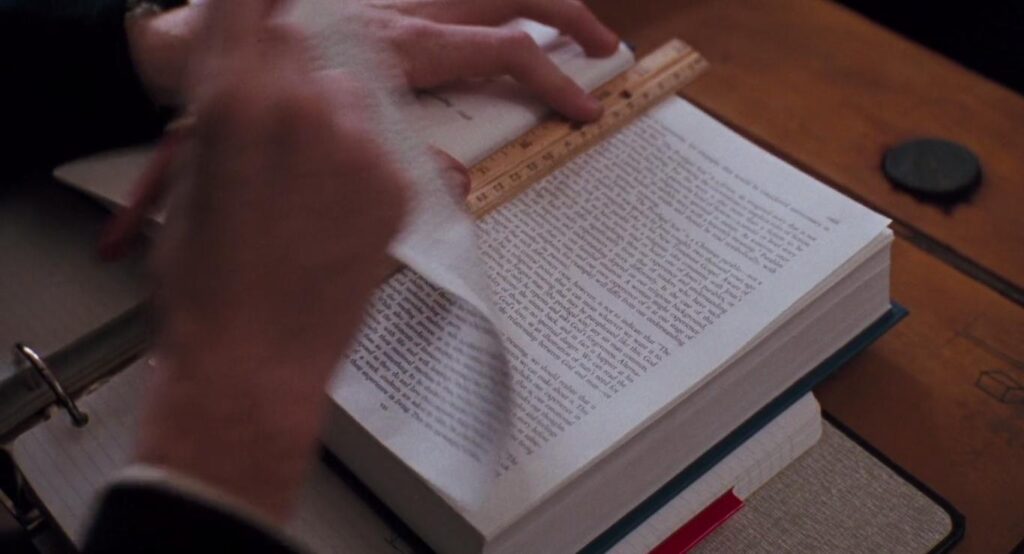
In the movie Dead Poets Society, Robin Williams’ character, John Keating, opens his first class by asking one of the students to read out the introduction to their poetry textbook (link at the bottom, so I don’t lose you during the first sentence). The intro describes a way of evaluating poetry that is based on a simple model that uses “perfection” on the X-axis and “importance” on the Y-axis. Calculating the total area of the poem, so it says, yields the measure of its greatness. Obviously, our beloved Robin Williams couldn’t disagree more: “We are not laying pipe here. We are talking about poetry”. He asks every student to rip out the whole introduction, emphasising his rejection of this type of thinking, especially in areas where it is utterly useless or even harmful.
I am going to try to help you rip out that page today or, at the very least, crumple it.Not for poetry, but for your views on human cognition and decision-making.
When people think about choices and behaviour, many adopt a sort of utility, cost-benefit, and model-style thinking. A good friend of mine (an economist) and I recently argued about the way we make decisions following his hypothetical example: “Should I”, as he put it, “tell the bastard next to me at the stadium to shut up, since he’s harassing players, or should I just keep it to myself?”. For him, that was a question of evaluating different outcome scenarios and weighing his discomfort of making a scene or possibly escalating the situation against his desire to stand up for what he thinks is right.
While this involves utility-style thinking and is clearly a form of cost-benefit analysis, it works without numbers and instead relies on a vague weighing of likelihood and preference: “Which outcome is best for me? I will pick the option that is overall most preferable”. There are many problems with that sort of thinking, and they exist on multiple levels.
There are problems within the utility model and especially with its assumptions, but most importantly there are big problems in adopting this model and its thinking.
The Preference Blender – Problems within the Model
A fundamental problem with utility-based thinking is that it mashes all sorts of different elements together and flattens them under the name of “preferences”. It compresses values, identity, emotions, bodily and neurological processes, temporal constraints and situational contexts into a single metric and pretends that they are at least somewhat quantifiable. These considerations can then be construed into different outcomes. In this case: speaking up and taking a risk versus not speaking up, but avoiding potential aggression and causing a scene. We pick the one we think we can live with better, or that avoids more pain (sprinkle some loss aversion), which in this case is maximum utility, and then move on.
These preferences, however, can change very quickly. Priming effects show how easily we can manipulate decision-makingprocesses without any awareness of the decision-maker. Just by changing the name of the “dictator game” to the “cooperation game”, for example, we can change the odds of people cooperating versus defecting, despite it being the exact same game. If they had a better grasp of their true preferences, their performance within the game should not be so easily swayable.
A behavioral economist might say that these are just reasons to improve the model or that true rationality cannot be achieved and that we are all fallible, irrational and biased beings, since we are human. But that we should nevertheless strive for rationality and that behavioral economists should help people to achieve it by either teaching them or nudging them towards their own happiness by utilizing their own self-interest for their own benefit.
If you are not a lost cause, you might ask yourself: Who is actually thinking this way? Only striving to maximise their own benefit and using it as the sole guidance for their decision-making. The answer is: most people in power and their advisers.
At LSE I went to a talk with Cass Sunstein, one of the most influential policy scholars of all time. He co-authored Nudge, which sold millions worldwide and led the White House regulatory apparatus under Obama. He presented his new research on the “barbie problem”, a term he invented for the phenomenon in which people would prefer to have a product not exist, but still prefer consuming it over not consuming it. Say there is a party, for example, and you don’t want to go. There are the options of 1) not going to the party, 2) going to the party and 3) magically making the party disappear so that you do not miss out but don’t have to go. To Cass, that is a question of revealed preferences through choice. If you select to go to the party, to him it means the “fear of missing out” outweighed the “not wanting to go”. If you stay home, the “not wanting to go”outweighs the “FOMO”.
When pushed by my friend Ben on whether there might be other explanations for wanting the party to happen but staying home, like wanting your friends to have a great party but not wanting to go yourself, Sunstein blinked about 15 times, said “hmm… yes” repeatedly for about a minute and seemed to have a complete reboot before answering. Turns out they never ask anyone why they make the decisions they make, they just infer possible explanations under the assumption of pure self-interest.
Not asking participants about their intentions is a limitation of quantitative research in general, but it becomes particularly problematic under the technocratic assumptions of (behavioral) economics, when we get all the information from the flow of money or revealed preferences. The calculative style of their research makes their work seem beyond all suspicion. Numbers after all, don’t lie. Their work, however, is deeply influenced by their own worldview and based on faulty assumptions.
Minds as Machines and Maximizers – Problems with the Assumptions
Assumption 1: The Computer Metaphor
According to the economic model, we need to be able to access and pinpoint all these processes inside ourselves in order to make a “rational” judgement, and do so at rapid speed. It follows the logic of the computer metaphor, in which we could, like an Excel spreadsheet, intuitively weigh possible options, calculate them, and then make an informed decision. Even when we have all the time in the world, it is rarely that simple. If it were, Ted would never have struggled to decide which girl to go out with after whipping out his pros and cons list. After all, Ted should have had all the data available, and he even had ample time to make his decision.
Especially when we are forced into immediate action, the decisions we make are often pre-reflective and only become rationalised through post-hoc reflection. The computer metaphor misrepresents cognition as serial calculation rather than embodied, situational action. It fails to recognise that we often discover our preferences through action, not prior to it. The model wrongly assumes that preferences always precede choice.
As much as some people might want to be computers, we (un)fortunately do feel things, and we are situated in the environment with our bodies, which fundamentally shapes our cognition. Emotions are not merely a variable within a decision-making process. They can be the very foundation on which the decision is made.
Assumption 2: We Are All Assholes
Another assumption the model relies on is that people are purely self-interested and always wish for the best outcome for themselves. For many people, this sits at the core of how they understand human behaviour, but let’s try to make a quick case against it (for a longer one, read Human Kind or look around you).
If, for example, I had just spent a lot of time thinking about ethics, maybe I had read about virtue ethics and wanted to practise what they preach, wouldn’t that strongly incentivise, or even demand, that I speak up for my convictions and tell the guy to shut the fuck up?
Now I hear the economists shouting from the back: “Well, but you certainly derive pleasure from that, don’t you? You’re just doing this because you couldn’t live with yourself if you acted against your values, and acting in accordance with them makes you feel good.” This is the trump card of arguing for constant self-interest.Everything you do, no matter how altruistic it might seem, you do only because you ultimately derive pleasure from it. That’s just human nature.
Actually, that’s just, like, your opinion, man! It is your Menschenbild.
Let’s return to the example and falsify a borderline unfalsifiable claim. What if we knew that this guy was aggressive and we therefore expected to get punched, or worse, expelled!? If we still spoke up, would that mean that we hated ourselves so much for possibly not speaking up that it would outweigh the potential pain of a broken nose? Maybe. Do we just love pain? Possibly.
But maybe we had just read about Rosa Luxemburg and how she was killed for standing up for her beliefs, and that somehow made it feel wrong to chicken out. Or maybe we remembered this one football fan who shouted “Halt die Fresse” at a Germany game, when some wanker started singing an the German anthem during a minute of silence for the victims of a shooting. Maybe that inspired us to take action ourselves and do the right thing.
Hmm. But that guy got loads of applause and was interviewed by BILD. Maybe we just want a little bit of that fame for ourselves. Quick side note: why do we so desperately want to believe that everyone, including ourselves, sucks?
Let’s take this up a notch. What about a mother sacrificing herself for her children? Economists from the back: “Well, because she couldn’t live with herself if she didn’t save her kids, obviously.” Okay. Then what about the soldier throwing himself onto a grenade to save his friends? Or a student running towards a school shooter? Or a kid running into traffic to save a kitten? Does anyone really think these people weighed potential outcomes and risks and said, “Let’s try to get killed here, because running away would be worse”?
Maybe they had a subconscious death wish? Maybe. Or maybe we need to accept that people function in more complex ways than a balance sheet, that decisions can be pre-reflective, and that some people might actually do things because they feel they are the right things to do, not because of ulterior motives or selfish preferences.
Thinking Like a Spreadsheet – Problems with Treating the Model as a Guide
Even if you disagree with everything I have said so far, I need you to stick around for this part.
The biggest problem with the utility model is not that the model itself is bad, but the general overreliance on model-based thinking. We need models to make predictions, but a prediction machine must not be mistaken for an accurate depiction of human thought. This is often forgotten, even though big daddy Keynes told us explicitly:
“Every model is wrong but some are useful”
This is the core problem: a model is always just a model. It is meant to depict reality in a simplified way, but in this case it becomes a guiding principle that shapes how people think and act. In aspiring to be more “rational”, people begin to integrate the model into their own thought processes, adopting its assumptions wholesale and without reflection. The economic framing and the assumptions it is built on turn into a self-fulfilling prophecy. The more pervasive cost-benefit thinking becomes, the more accurately it seems to describe reality, not because people have always thought this way, but because more and more people start to think in its terms. What begins as reductive description turns into actual reality.
The model reproduces its own assumptions within our thought processes, until our thinking becomes a simulacrum of itself. Rather than imperfectly describing how people think and act, it becomes an internalised view of how people assume they already do. Trying to think like a spreadsheet by weighing and calculating all options pushes us into overthinking, away from our bodies and deeper into our heads.
As Sydney J. Harris said:
“The real danger is not that computers will begin to think like men, but that men will begin to think like computers”
Not life imitates art, but life imitates computer – how sad.
Recovering Ethics – Choosing Character
So what’s the way out, then? If I only think in cost-benefit scenarios to derive maximum happiness for my own little me-corporation? A purely utility-maximising approach would probably have left us without most revolutionaries, and it would make genuinely good actions far rarer. Very few people would take real risks, stand up against injustice, or sacrifice comfort for principle if every decision were filtered through expected personal payoff.
Let us look at some of the OGs and posit a different perspective. According to Aristotle and other ancient greek philosophers a good life does not rely on or seek pleasure. Pleasure is the byproduct of acting in accordance with character. You don’t act virtuously because it feels good. It feels good because it expresses a settled disposition and shows alignment with yourself. For the economists among us: Think of Goodhearts law:
“When a measure becomes a target, it ceases to be a good measure.”
You heard it. According to one of your own, maybe give not trying to maximise pleasure at every turn a shot and instead try to live a life more in accordance with your virtues. It might make you feel a little less dead inside. But what are your virtues?
You have to ask yourself: What values are you practicing when you don’t speak up? Cowardice, comfort, #riskaversion? Does that make you feel good and aligned, or does it make you feel uneasy and ashamed, maybe even a little disgusted with yourself? What virtues seem to want to pour out of you at times, but you suppress them with cost-benefit thinking until the moment to do or say something has passed? Who do you admire, not for what they have, but for who they are and how they act? And why?
While you sit with that, I will offer a deeper reflection and a more concrete “how-to-virtue” guide in my next post (ultimate virtue signaling).
“If your parents’ faces never lit up when they looked at you, it’s hard to know what it feels like to be loved and cherished. If you come from an incomprehensible world filled with secrecy and fear, it’s almost impossible to find the words to express what you have endured. If you grew up unwanted and ignored, it is a major challenge to develop a visceral sense of agency and self-worth.”
Bessel van der Kolk – The Body Keeps the Score
As I mentioned in the last post, I have recently attended the conference “Transform Trauma – Healing our relational world”, and I wanted to share some nuggets of what I have learned, as well as some of my own thoughts.
Today I will try to ease you into this topic and talk about the “Still Face Experiment” led by Ed Tronick (what a name).
In the following weeks, I plan to cover:
Trauma as a hidden epidemic
Somatic therapy and embodiment in trauma treatment
Psychedelics and IFS therapy
When we think of trauma, we typically think of what is referred to as big T trauma, which describes trauma caused by singular, overwhelming events such as experiences with violence, sexual abuse, natural disasters, or other life-threatening situations.
Small t trauma, on the other hand, encompasses more frequent, distressing, but non-life-threatening experiences such as bullying, emotional abuse or neglect, or prolonged stress.
Both of these types of trauma are valid and can lead to significant psychological effects, including anxiety, depression, and difficulties forming healthy relationships. As Matthias Barker, one of the speakers at the conference, put it:
“You can die from a single blow, but you can die just as well by a thousand cuts.”
The Still Face Experiment is a perfect illustration of the severity of small t trauma and can give us an idea of how responsive children are to their needs being neglected. Have a look — it’s a 2 min video.
In this video, you first see a baby playing with his mother. He is engaged and excited, he laughs, smiles, and plays. The baby reaches out to the mother and they touch; he points somewhere, and his mother looks to where he points. There is a clear bond between the two, and the baby’s emotional needs are being met. He is clearly comfortable and happy.
In the second part of the video, you see the same mother look at the baby with a still face for a prolonged period of time. The baby tries everything he can to engage his mother. He smiles at her. He reaches out to her. Quickly he becomes confused and avoids eye contact, but he still attempts to regain her emotional attention by pointing where he previously pointed, hoping to receive the same reaction as before.
He tries all the things that usually lead to a reaction from his mother. When he realizes that nothing seems to gain her attention, he panics. He starts crying, and his nervous system gets so overwhelmed that he fully collapses into himself. He then withdraws and does not try to regain his mother’s attention anymore or to establish connection.
It’s important to note that the relationship between infants and parents, even at these early stages, is already dyadic. Infants already have needs and desires, goals and intentions. They need to make sense of themselves, their relationships, and their environment — and they need attachment for that. The baby’s panic in Tronick’s video is not only about separation — it’s a rupture of the self.
As the psychoanalyst Donald Winnicott famously stated:
“In individual emotional development, the precursor of the mirror is the mother’s face.”
When the mother’s face goes blank, the infant loses that mirror — the reflection that confirms, I am real, I exist, and I can impose myself on the world. Since there is no one to look back in this situation, the child loses himself and his agency, which is experienced as a threat to his safety.
John Bowlby – father of attachment theory – helps explain why. The caregiver is not just an emotional figure; they are the infant’s entire regulation system. Infants make meaning by using all the bits of their brain that they already have, which are different neuro-somatic, embodied systems. Meaning is thus made without awareness, language, or symbols, but co-created within the relationship to the caregiver and their own bodies.
When the attachment to the mother is severed, the baby’s body reads it as danger and reacts accordingly. We also see, at the very end of the video, that the mother manages to reestablish connection. She starts to engage with the child, and within seconds they are playing once more, and the baby looks visibly happy and relieved.
However, when you confront the baby with the Still Face a second time, one day later, their cortisol levels are still raised, and they experience even more arousal and stress than the first time, despite the fact that reparation has taken place.
These memory effects, of the bad experience, last up to two weeks, meaning that a mere two minutes of exposure still have an impact on the child when re-exposed two weeks later. Considering how comparatively unproblematic it is to look at a still face for two minutes, it becomes clear how big of an impact emotional abuse and neglect can have on children, especially when it occurs frequently.
Another experiment led by Ed Tronick underlines the immense sensitivity children have to the emotional state of their caregivers. They primed one group of mothers with sounds of babies crying before they interacted with their children, while making the other group listen to babies making happy noises — attempting to induce stress as well as relaxation.
More than half of the babies of the “stressed mothers” group cried during the next interaction with their mothers, while in the group with the happy noises, only one child cried. Tronick and his colleagues couldn’t find any physiological or behavioral differences between the different groups of mothers, despite trying for six months.
It lead them to the conclusion that children are more susceptible to slight changes in their caregivers’ demeanor than is observable or measurable by “a number of brilliant researchers,” as he put it.
Considering that these experiments already induced visible and measurable stress in the infants we are ought to ask ourselves: What if this stress is not just induced once or twice in the environment of a lab setting, but is a reoccurring or constant reality at home?
When caregivers have dulled emotional capacity and expression due to depression, alcoholism, or chronic stress, it is impossible for children not to be affected by it. When they create an unsafe, volatile home through verbal abuse, neglect, or emotional absence, the child is experiencing this as constant distress.
Distress, according to Tronick “wastes” energy that could better be utilized for growth and development. The calm state uses 5-6 times less energy than the distressed state.
Furthermore, the child needs to learn how to navigate this unsafe environment. It is repeatedly faced with the choice of either authentically expressing their emotions or maintaining their need for attachment and safety. They learn that love can be withdrawn and connection is volatile and can vanish and they realize that expressing certain emotions makes the caregiver uncomfortable or angry, and they adapt accordingly.
The child learns to adapt by becoming what Winnicott called a false self — a version of themselves designed to keep connection and safety at all cost. But by learning to suppress their anger, sadness and frustration, they lose connection to their true self. They start living in their heads and with a highly edited version of themselves, instead of their bodies. The problem is, we cannot escape our own nervous systems by simply ignoring them or thinking our way out of it.
These suppressions often still find an outlet — a jaw that tightens, a stomach that knots, a throat that closes, or a heavy chest. What was once a child’s adaptive silence becomes an adult’s chronic tension as the body keeps rehearsing the conversations the mouth never had. Over time, this disowned energy can surface as anxiety, irritability, fatigue, or even physical pain and illness — the nervous system’s way of saying, “I’m still here and I’m not doing so great.”
As Bessel van der Kolk often reminds us – and as the title of his book declares – “the body keeps the score”.
Dealing with trauma and working through it is essential not only for ourselves, but also for the generations that follow. Those who carry unresolved trauma often struggle to provide the safety and attunement they never received, and this is how patterns of pain repeat across generations and the trauma of cycle is passed down.
Now this might sound like a typical “therapy for all” argument, and I don’t discount the fact that good therapy would probably be able to alleviate at least some of the burden carried by many people and help them become more attuned, flexible, and healthy. However, I also think that it demands us to take a closer look at the conditions we live in, and how much they help to reproduce these cycles of trauma.
StanleyGreenman a famous child psychologist put it this way:
“If our society were truly to appreciate the significance of children’s emotional ties throughout the first years of life, it would no longer tolerate children growing up or parents having to struggle in situations which could not possibly nourish healthy growth.”
Stanley Greenman
In the next post “Trauma as a hidden epidemic” I want to discuss the prevalence and significance of trauma in our society and what we could do about it – on both an individual and a systemic level.